At the tail end of last week, I finished the draft for what I am hoping will be the sixth book in my mystery series. 86,558 words. It felt really good to lay down that metaphorical pen and walk blinking into the sunlight.
It's a big step, but of course it is only a step. Next it goes to my editors. And that's where the Three of Pentacles work begins. We've visited this card twice in the past (I wrote about it as a representation of the Great Work HERE, and as the card of collaboration HERE) and so today I look at it through my own personal lens, which this morning is one of amazement at all of the different facets a creative work brings into focus.
There is planning, represented here by the figure with the blueprints, the bringer of equations and theory, eye-pleasing arches and load-bearing walls. There is practice, the worker atop the bench, translating the words and images into brick and mortar. And there is inspiration, the tonsured priest, providing the reminder that the spark at the heart of any creative endeavor can be a connection to a larger purpose (and that one would not be off-base to think of it as Divine, if one so chooses—not required but absolutely appropriate).
At different times in the process, I am all of these people. I serve as priest and architect and craftsperson as word by word my work begins to stand on its own. Hopefully it will be a place that people will want to visit—I have tried to make it welcoming and lovely and accessible, tried very hard—but I am content that it exists as both a product of my expectations and separate from them. I am content that I did my very best.
It's not turn-key ready, not yet. But I am excited to think that it will be soon.
This week, consider the different ways that you show up for your own work. Ponder the specific joys and satisfactions of each. There is delight in sandpapering that is equal to the delight of blessing that is equal to the delight of planning the broad strokes of a soaring cathedral. Be grateful for them all.
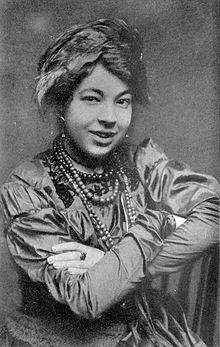 Today is the last Sunday in March, which is Women's History Month. I thought it fitting to close out with a repeat of a previous column celebrating the woman at the heart of tarot, Pamela Coleman Smith, whose designs make up the famous Rider-Waite-Smith deck and whose name is often unfortunately, heinously, criminally left out of the deck's name.
You can still see her on the cards, though. Look on each for a small monogram of a “P” crossed with a looping “C” and “S.” It looks like a cross between a sigil and a logogram, and it is the signature of Pamela Coleman Smith.
Today is the last Sunday in March, which is Women's History Month. I thought it fitting to close out with a repeat of a previous column celebrating the woman at the heart of tarot, Pamela Coleman Smith, whose designs make up the famous Rider-Waite-Smith deck and whose name is often unfortunately, heinously, criminally left out of the deck's name.
You can still see her on the cards, though. Look on each for a small monogram of a “P” crossed with a looping “C” and “S.” It looks like a cross between a sigil and a logogram, and it is the signature of Pamela Coleman Smith.
 You can find it easily in the lower right of the Three of Cups, the card that celebrates the richness of deep friendship. Smith chose to illustrate that card with three women dancing in joy and abundance and camaraderie, their golden chalices held high, and so now that card has become synonymous with the power of female relationship.
Pamela did that.
The Rider-Waite-Smith, also called the RWS, is the most famous of the tarot decks. Its images are well-known in popular culture. What is less well-known is how revolutionary those images are, how they completely transformed tarot interpretation. As the illustrator for the deck, Smith created pictorial scenes not just for the major cards—the heavy hitters like Death and The Fool—but also for the pips, the numbered cards. By portraying the minor arcana in this way, Smith removed the separation between the "big" cards and the "little" ones, making the more mundane moments of our lives, the nostalgia and ennui and first heart-flutter of romance, as important and worthy of contemplation as the milestones.
You can find it easily in the lower right of the Three of Cups, the card that celebrates the richness of deep friendship. Smith chose to illustrate that card with three women dancing in joy and abundance and camaraderie, their golden chalices held high, and so now that card has become synonymous with the power of female relationship.
Pamela did that.
The Rider-Waite-Smith, also called the RWS, is the most famous of the tarot decks. Its images are well-known in popular culture. What is less well-known is how revolutionary those images are, how they completely transformed tarot interpretation. As the illustrator for the deck, Smith created pictorial scenes not just for the major cards—the heavy hitters like Death and The Fool—but also for the pips, the numbered cards. By portraying the minor arcana in this way, Smith removed the separation between the "big" cards and the "little" ones, making the more mundane moments of our lives, the nostalgia and ennui and first heart-flutter of romance, as important and worthy of contemplation as the milestones.
She created scenes and peopled them with with dynamic characters, allowing the reader to literally imagine herself in the cards. Her background as a theatre major shows in these stagings, which are clear enough to get right to the heart of each card's energy, but intricate enough that the reader can layer her own life on top of them and read the details—here a white dog, there a handful of roses—as personal revelation.
As Smith herself explains in an article entitled "Should the Art Student Think?":
"Note the
dress, the type of face; see if you can trace the character in the face;
note the pose. . . . First watch the simple forms of joy, of fear, of
sorrow; look at the position taken by the whole body. . . . After you
have found how to tell a simple story, put in more details. . . . Learn
from everything, see everything, and above all feel everything! . . .
Find eyes within, look for the door into the unknown country."
The door into the unknown country. Yes indeed.
It's one of the great unfairnesses that Smith received very little compensation for her work, and even less recognition for helping create what has become the most accessible and popular tarot deck of all time. As she wrote to her mentor, Alfred Stieglitz, "I have just completed a big job for very little cash!" Even her name got dropped from the deck, which is why I both write and speak that SMITH now in all caps.
She was a multi-faceted person—a synaesthetic artist and member of The Order of the Golden Dawn who eventually converted to Catholicism. She published writers like William Butler Yeats in the magazine she founded, had her work exhibited at top notch galleries, worked as an illustrator for Bram Stoker, and yet she died penniless.
She was a fervent supporter of women's suffrage, lending her voice and her talents to the cause. Little is known about her romantic life except that she never did marry, preferring the company of women, it seems. She was eccentric, brilliant, generous, and lived a life of adventure and whole-hearted creative joy.
So when you speak of the tarot, be sure to give Pamela Colman Smith her due. Say her name loud and proud.
In honor of her, and as a gift for you, I offer the Three of Cups this week. May you find joy and support and abundance among your tribe, and may you always know the love of good strong creative women.
For Further Reading:
The BBC's Bio of Pamela Colman Smith (with fascinating footnotes)
"Giving Thanks to Pamela Colman Smith" on Little Red Tarot
"Pamela Colman Smith" at Wikipedia (also with interesting footnotes and further source reading
Holly Voley's Website devoted to Pamela Colman Smith
This week, I decided to make our tarot reading a team effort. So I asked the other tarot reader in the house—my daughter Kaley— to choose a card for us this week.
I had a good reason. Creative endeavors, especially writerly ones, are often solitary pursuits. Seeking the lighthouse of one's art, following that clear beam in the night to your destination, is often singular in nature. Oars in hand, we beat through the waves for the safe shore.
That's the metaphor, of course—the day to day mundane reality is less poetic. Sitting down to the page requires determination and self-mastery. It requires putting aside the indulgences of a lazy afternoon, giving up an afternoon movie, forgoing the nap. One must learn to love the company of oneself. In fact, many of us chose the writing life because we are by nature introverted and solitary. The thought of teamwork is a little uncomfortable.
So I decided to ask for some help. And—the tarot being oracular and my daughter being a brilliant channel for it—she promptly drew the Three of Pentacles. The card of working as a team.
We've covered this card before (you can read about it here). I wrote then about the concept of the Great Work, the idea that even the most mundane task is laying the foundation for a larger success, a meaningful and significant work. That your part in that work is to show up as honestly and sincerely and openly as you can.
In a comment last time the Three of Pentacles appeared, my brilliant friend Laura is reminded me "of this card's collaborative aspects: not just with other writers, but with all the people that make writing happen: readers, agents, editors, research buddies." This week, appreciate your creative team. Give them some kudos. Remind yourself of the marvelous web of connection all around you.
For me, the tarot is the Swiss Army knife of divination— I think that's one of the reasons I return to it again and again, finding new uses and meanings and purposes every time I do. Last week, I explained how divination wasn't fortune telling, for there is no locked and fixed future as long as we have free will. Our choices will always unfold new destinies for us.
This active, fertile tension between choice and fate is why I sometimes ask the Universe to choose a card for me (my usual practice here on the blog) and why I sometimes choose for myself, picking a card that resonates with an energy that I would like to explore or that I want to honor with my attention and intention.
This week's card—the Three of Cups—falls into the latter category. See, I just returned from UU Womenspirit, a gathering of women honoring the Feminine Divine through song and circles, workshops and worship. Arthur Waite's description of the Three of Cups describes this energy perfectly: "Maidens in a garden-ground with cups uplifted, as if pledging one another. Divinatory meanings: The conclusion of any matter in plenty, perfection and merriment; happy issue, victory, fulfillment, solace, healing."
Yes. Exactly that.
So I chose this card to honor my return home, my cup running over, my heart enriched with memory and connection and gratitude for these women who shared space with me, who held space for me, who opened up new vistas and viewpoints and revelations.
I returned home to community too, my fellow Mojito Literary Society members, writers and poets and creatives of all sorts who are always there to provide support and connection and juice. I previously wrote about the need for such writerly connection as expressed in the Three of Cups—you can find that here—but we all need reminding. As I wrote then:
"We humans raise our glasses for lots of reasons: to toast, to honor, but also to pledge. That's what the three women are doing in this card — pledging and promising to be there for each other, and to hold each other to that pact. To help each other remember. And re-member."
This week, re-member with your community, with the people who keep you sane and joyful in your work, who remind you of who you are, who toast your successes and console you on your losses. Who are your connection to what matters: your own circle of belonging.
I raise my chalice to each and every one of you. Thank you for joining me on this tarot journey, however you come to it. I am glad to have you.
Roll up your sleeves and let's get to work, people—the Three of Pentacles is in the house.
Since the Pentacles (or Coins or Discs) is the suit of all things foundational and material, it has a lot of advice to offer about work, especially the nuts and bolts and day-to-day practice of it.
Because as any writer knows, putting words on a page is real, often challenging, work. Sometimes inspiration flows; sometimes we're digging spoonfuls of dust from a dry well. Sometimes anything, even cleaning out the proverbial litter box, sounds better than bellying up to our work in progress.
And yet writers write. We show up at the page again and again. We keep our appointments and trust that our Muses will keep theirs. Writing is Pentacle business, sure enough, and this week the Three of Pentacles is here to remind us why that practical aspect of writing is just as important as its more emotional or imaginative components.
Let's start with that word "work." It has connotations of drudgery, unpleasantness. Work is the thing you must do before you can do the thing you want to do. Mystics of an alchemical bent, however, speak of the Great Work, a holy process of becoming, of learning and achieving one's true will and purpose. When we do the thing we are called to do, when we practice our spiritual vocation, we play our part in this great unfolding. The Great Work is huge, yes, but it is composed of our daily work in the same way that a novel is built word by word, each word built letter by letter. In the Great Work, there is no separation between the mystical and mundane except in our thinking.
This understanding is key to the Three of Pentacles. A group of workers gather under a gracefully constructed arch. The brickwork around the arch reveals it to be part of a larger building, but this singular feature holds our workers' attention. One has climbed atop a bench to get a closer look. Another consults what looks like plans or blueprints. They know that this piece matters, that it belongs to a greater creation that can only be achieved by getting this part exactly right. And so that is what they are doing. It is work, yes. But it is also love.
This week, you have work before you. The Three of Pentacles is here to assure you that it is good work, that you are laying a strong foundation for a larger success. Knowing this, seek satisfaction in even the smallest task. Pay attention to the minute details. Get up close. Run your finger along the lines of what you are creating and be grateful that the Universe has placed such a finely wrought piece into your care.
Ready to begin? Then let us begin.
I'd been trying to have coffee with a writer friend for a few months, but our schedules never cooperated. Sickness and work also complicated things until last week, when a slice of free time opened up and we shared a few hours of writerly commiseration and camaraderie over a nice Ecuadorian blend. As I laughed and talked, I was reminded yet again of why the Three of Cups is such an important card for us writers.
It signifies community, specifically the close-knit circle of like-minded friends. People you are comfortable laughing with. Of course, these are the same friends who will be there during tears, but the Three of Cups symbolizes the happy times, the shared joy, a time of, as described by tarot creator Arthur Waite, "plenty, perfection and merriment."
But there's a deeper octave to this card. Sure, it's good to take a break and celebrate life with your friends. It's hard to consider this a necessity. We writers are a solitary lot because there is so much work to be done — the inbox! the deadlines! the blogs that need writing! And since we're upper management in this endeavor, allocating time to enjoyment seems frivolous. But it is vital to our work, and even more vital to our hearts (which, of course, are necessary for our work).
There is a sense of promise to this card as well. We humans raise our glasses for lots of reasons: to toast, to honor, but also to pledge. That's what our women are doing in this card — pledging and promising to be there for each other, and to hold each other to that pact. To help each other remember. And re-member.
So this week, call up a friend for a shared hour of conversation. Start a new collaborative project with a fellow creative. Celebrate your people, your community, your tribe. Celebrate connection.
 There is nothing equivocal about this card. It is sorrow, piercing and heart-rending. For though we process life in our head, our heart must channel the pain, and it does this physically. Viscerally. It is our birthright, heartache, and the Three of Swords is its avatar.
I am in no way surprised to see it this morning. It is actually a small comfort, to have the hurt named and pictured. These readings are meant for everybody who finds their way here, for the community of writers and readers and creative folk I am so lucky and blessed to be a part of, but each card is first and foremost a message for myself. Each represents a piece of my own life, my own process. But if there is one thing I have learned, it is that the personal is the universal. When you share the truth about yourself, you are sharing the truth about the whole of us.
And I am in mourning today, with the rest of the world, for Paris and her people. For all the lives lost in blood and terror, this week and all the days previous. For the fear that first shouts, but then creeps, and then eventually marches. How do I send my child into such a world? How do I tell her to open her arms to it when today there is only aftermath? The natural inclination is to pull the blades from our heart and stab them into something else. Someone else, some guilty person, for surely someone deserves this burden more than we do.
But no. No. We strive to move past pain, but we must learn to sit with it, our own pain and the pain of others. And then we must learn to walk around with it throbbing within us. Laugh with it. Love with it. Sorrow is a tide, rising and falling. Ancient, powerful, and as endless as the ocean.
There is nothing equivocal about this card. It is sorrow, piercing and heart-rending. For though we process life in our head, our heart must channel the pain, and it does this physically. Viscerally. It is our birthright, heartache, and the Three of Swords is its avatar.
I am in no way surprised to see it this morning. It is actually a small comfort, to have the hurt named and pictured. These readings are meant for everybody who finds their way here, for the community of writers and readers and creative folk I am so lucky and blessed to be a part of, but each card is first and foremost a message for myself. Each represents a piece of my own life, my own process. But if there is one thing I have learned, it is that the personal is the universal. When you share the truth about yourself, you are sharing the truth about the whole of us.
And I am in mourning today, with the rest of the world, for Paris and her people. For all the lives lost in blood and terror, this week and all the days previous. For the fear that first shouts, but then creeps, and then eventually marches. How do I send my child into such a world? How do I tell her to open her arms to it when today there is only aftermath? The natural inclination is to pull the blades from our heart and stab them into something else. Someone else, some guilty person, for surely someone deserves this burden more than we do.
But no. No. We strive to move past pain, but we must learn to sit with it, our own pain and the pain of others. And then we must learn to walk around with it throbbing within us. Laugh with it. Love with it. Sorrow is a tide, rising and falling. Ancient, powerful, and as endless as the ocean.
How are we to respond today, to this freshly broken world? We do our work. We show up. We open to the whole of this morning and this day and this life. I believe that creative work is a particular kind of prayer, that it connects us to that which is bigger than us, and to each other, in ways that are profoundly spiritual. This I believe. And so this I practice, today especially.
In his poem "A Brief for the Defense," poet Jack Gilbert insists that "we must risk delight . . . We must have the stubbornness to accept our gladness in the ruthless furnace of this world. To make injustice the only measure of our attention is to praise the Devil."
This week, risk delight. Go to the page or the easel or the wheel or the dance floor with stubborn gladness. A pierced heart is an open heart. Honor the wounded places. Do your work. And blessed be.


